Every child learns mathematics.
We teach them how to solve equations, calculate percentages, and understand complex formulas. Yet one of the most important skills for navigating life is rarely taught in classrooms: how to understand and manage emotions.
A child may know how to solve algebra but still struggle to answer a much harder question:
“Why do I feel this way?”
In a rapidly changing world filled with social pressure, digital noise, family stress, and academic expectations, children and adolescents are experiencing emotions that many do not know how to process.
We have taught children how to calculate numbers.
But we have not taught them how to calculate feelings.
The Problem: Emotional Illiteracy
Emotional illiteracy occurs when individuals struggle to identify, understand, and express their emotions.
When emotional education is missing:
- Children suppress feelings rather than process them
- Conflict increases in schools and homes
- Anxiety and depression rise
- Young people struggle with identity and decision making
Without emotional tools, children carry what I call “invisible emotional backpacks.”
Inside are unprocessed experiences such as fear, pressure, rejection, grief, or confusion.
Over time, these emotions grow heavier.
And yet no one teaches children how to unpack them.
Why Emotional Education Should Be Taught Like Mathematics
Mathematics is taught daily because repetition builds mastery.
The same principle should apply to emotional learning.
If children practiced emotional reflection every day, they would develop the ability to:
- Recognise emotions early
- Communicate feelings clearly
- Regulate stress and conflict
- Build empathy and healthy relationships
Just as mathematics helps us solve numerical problems, emotional education helps us solve human problems.
Introducing the Daily Activity
The “Soul Canvas Emotional Equation”
To make emotional education simple and practical, I propose a daily activity called The Soul Canvas Emotional Equation.
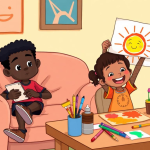
It is a 3-minute creative emotional reflection exercise that children can practice at school or at home.
It combines drawing, storytelling, and emotional awareness.
How it Works
Every day children are given a small space in a notebook or worksheet.
They answer three prompts:
1. What emotion visited me today?
Children write the emotion they experienced.
2. Why did this emotion appear?
They reflect on what triggered the feeling.
3. What helped me handle it?
They describe how they responded.
Children can express this through:
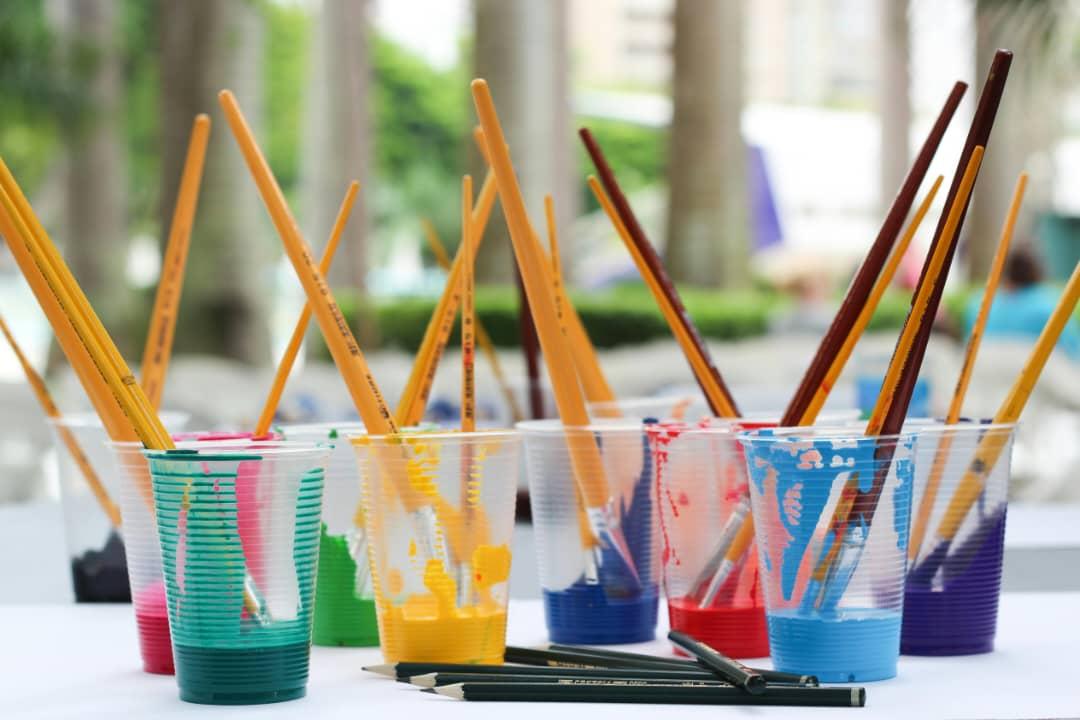
- colours
- drawings
- short words
- symbols
- stories
There is no right or wrong answer.
The goal is simply awareness.
The Long-Term Impact
If emotional education became part of everyday learning, we would see children grow into adults who are:
- more emotionally resilient
- better communicators
- more empathetic leaders
- better decision makers
In other words, emotional education does not only improve wellbeing.
It improves society.
We have spent generations teaching children how to solve mathematical equations.
It may now be time to teach them how to solve emotional ones.
Because understanding emotions is not a luxury skill.
It is a life skill.
And like mathematics, it should be practiced every day.
About the writer
Michel Rutendo Mandiopera is a Social worker, youth advocate, and creative wellbeing entrepreneur committed to empowering young people and strengthening communities. Inspired by personal experiences that shaped her understanding of trauma and resilience, she works at the intersection of social work, creativity, and youth development.
She holds a BSc in Sociology, a National Certificate in Applied Law, and a Postgraduate Diploma in Social Work, and is currently a Mastercard Foundation Scholar at the University of Edinburgh studying Global Challenges. Michel has contributed to global youth initiatives including the UNICEF Youth Foresight Circle and Common Futures Conversations at Chatham House, and is a One Young World Ambassador and Effective Altruism Sweden fellow.
She is the founder of Soul Canvas Creations, a creative wellbeing initiative that uses art and storytelling to help young people build emotional literacy, resilience, and confidence.